
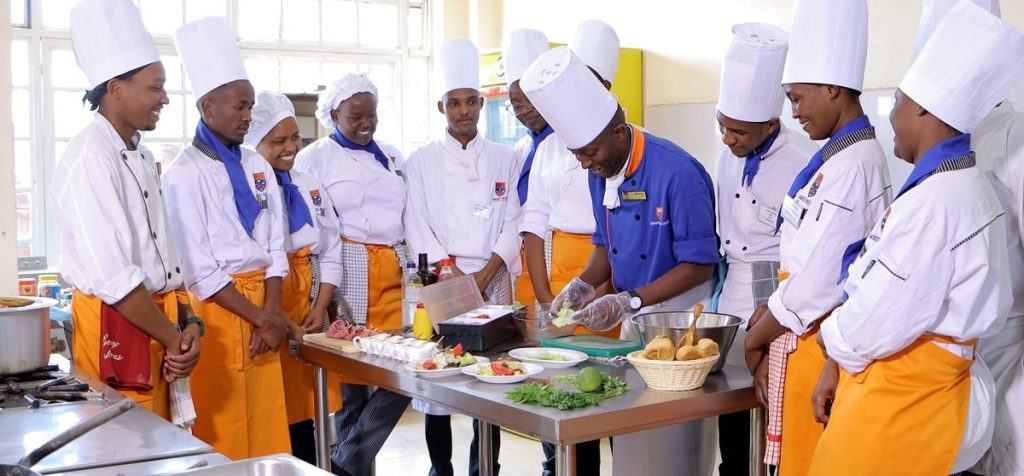
Food and Beverage is one of the most popular areas of hospitality training in Kenya. It focuses on the skills needed to prepare, present and serve food and beverages while providing professional customer service in restaurants, hotels, cafés, catering businesses and other hospitality establishments.
There are different food and beverage courses in Kenya, ranging from short practical courses to certificate, diploma and higher-level programmes. Some focus mainly on food and beverage service, while others cover broader areas such as restaurant operations, bar service, hospitality management and food production.
If you are wondering which food and beverage course is best, the answer depends on your career goals. Someone interested in restaurant service may choose Food and Beverage Service, while someone who wants to progress into management may prefer a broader hospitality or food and beverage management programme.
This guide covers the best food and beverage courses in Kenya, entry requirements, duration, approximate fees, what you learn, career opportunities, salary expectations, practical training and self-employment opportunities.
What Are Food and Beverage Courses?
Food and beverage courses are hospitality training programmes that equip students with the knowledge and practical skills needed to work in the food service industry.
The training focuses on how food and drinks are prepared, presented and served to customers in professional hospitality environments. Students also learn about customer service, restaurant operations, hygiene, food safety, beverage service and, depending on the programme, hospitality management.
Food and beverage training can prepare students for careers in:
- Hotels
- Restaurants
- Cafés
- Bars and beverage establishments
- Catering companies
- Clubs and resorts
- Conference facilities
- Events
- Institutional catering
- Cruise and international hospitality operations
What Do Food and Beverage Courses Cover?
The exact subjects depend on the course and qualification level, but common areas include:
- Food and beverage service – Serving food and drinks professionally.
- Restaurant operations – Understanding how restaurants and dining outlets operate.
- Table service – Setting tables, taking orders and serving customers.
- Beverage service – Learning about the service of hot, cold and other beverages.
- Customer service – Communicating with customers and handling their needs professionally.
- Food safety and hygiene – Maintaining safe food handling and service practices.
- Menu knowledge – Understanding food and beverage menus and explaining options to customers.
- Bar and beverage operations – Depending on the programme, students may learn beverage preparation and service.
- Stock control – Managing food, beverage and service supplies.
- Food costing – Understanding costs and pricing.
- Restaurant management – Managing staff, service and daily operations.
- Events and banquet service – Providing food and beverage services at functions and events.
Who Can Study Food and Beverage?
Food and beverage courses can be suitable for a wide range of students and professionals, including:
- KCSE graduates
- Students looking for practical career training
- People interested in hotel and restaurant careers
- Aspiring waiters and food service professionals
- People interested in restaurant management
- Aspiring event service professionals
- People interested in hospitality entrepreneurship
- Existing hospitality workers seeking additional qualifications
- Professionals who want to improve their food and beverage skills
Your choice of programme should depend on your KCSE grade, career goals, budget and desired level of specialization.
Best Food and Beverage Courses in Kenya
There are several food and beverage-related programmes you can consider depending on your interests and career objectives.
| Course | Main Focus | Typical Level | Best For |
|---|---|---|---|
| Food & Beverage Service | Restaurant and beverage service | Certificate | Waiters and service professionals |
| Food & Beverage Management | Managing food and beverage operations | Diploma | Supervisors and managers |
| Food & Beverage Production | Food preparation and production | Certificate/Diploma | Kitchen and food production careers |
| Hospitality Management | Broader hotel and hospitality operations | Certificate/Diploma | Hospitality careers |
| Food Production | Professional food preparation | Certificate/Diploma | Cooks and chefs |
| Catering & Accommodation | Food, accommodation and hospitality | Certificate/Diploma | Hotel and catering careers |
| Barista & Beverage Service | Coffee and beverage preparation | Short Course | Baristas and café workers |
| Restaurant Operations | Restaurant service and management | Certificate/Diploma | Restaurant professionals |
The best option depends on whether you want to specialize in service, food production, beverages, restaurant operations or management.
1. Food and Beverage Service Course
Food and Beverage Service is one of the most direct routes into the food service industry.
The course focuses on serving food and beverages professionally and creating a positive dining experience for customers.
It is particularly suitable for students who enjoy customer interaction and hospitality service.
What Do You Learn in Food and Beverage Service?
Students may learn:
- Table setting
- Taking customer orders
- Food service
- Beverage service
- Restaurant service
- Buffet service
- Room service
- Customer care
- Menu knowledge
- Restaurant hygiene
- Food safety
- Handling customer complaints
- Professional communication
- Banquet and event service
Career Opportunities
Graduates can work as:
- Waiter or waitress
- Food and beverage attendant
- Restaurant attendant
- Banquet attendant
- Room service attendant
- Catering assistant
- Restaurant supervisor
- Food service assistant
With experience and further training, graduates can progress to supervisory and management roles.
2. Food and Beverage Management
Food and Beverage Management is designed for students interested in managing food and beverage operations rather than focusing only on basic service.
The programme can be suitable for people who want to progress into supervisory or managerial positions in hotels, restaurants and other hospitality businesses.
What Do You Learn?
Topics may include:
- Food and beverage management
- Restaurant operations
- Menu planning
- Food costing
- Beverage management
- Purchasing
- Stock control
- Staff supervision
- Customer service
- Quality control
- Hospitality accounting
- Food safety
- Event and banquet management
Career Opportunities
Graduates can pursue roles such as:
- Food and beverage supervisor
- Restaurant supervisor
- Food and beverage manager
- Restaurant manager
- Banquet supervisor
- Catering supervisor
- Hospitality supervisor
- Food service manager
This option is particularly useful for students who see themselves leading teams or managing hospitality operations in the future.
3. Food and Beverage Production
Food and Beverage Production focuses more heavily on food preparation and production while connecting these skills to hospitality operations.
It can be suitable for students interested in professional kitchen work, food businesses and hospitality establishments.
Areas Covered
Students may learn:
- Food preparation
- Cooking methods
- Kitchen operations
- Food presentation
- Menu planning
- Food safety
- Kitchen hygiene
- Food storage
- Portion control
- Food costing
- Kitchen equipment
- Production planning
Career Opportunities
Graduates can work in:
- Hotels
- Restaurants
- Catering companies
- Schools
- Hospitals
- Institutional kitchens
- Food production businesses
- Events
Possible positions include:
- Cook
- Kitchen assistant
- Commis chef
- Food production assistant
- Catering assistant
- Kitchen supervisor
4. Hospitality Management
Hospitality Management provides broader training in the hospitality industry and can include food and beverage operations as one of its major areas.
It can be suitable for students who do not want to limit themselves to restaurant service.
What Do You Learn?
Depending on the programme, subjects may include:
- Food and beverage operations
- Front office operations
- Accommodation
- Housekeeping
- Restaurant management
- Customer service
- Hospitality marketing
- Business management
- Food safety
- Hospitality accounting
- Human resource management
Career Opportunities
Graduates can work in:
- Hotels
- Restaurants
- Resorts
- Lodges
- Catering companies
- Conference facilities
- Hospitality businesses
Possible roles include:
- Hospitality assistant
- Restaurant supervisor
- Food and beverage supervisor
- Front office assistant
- Hotel supervisor
- Hospitality manager
Hospitality Management is a good choice for someone who wants a broader career in the hotel and hospitality industry.
5. Food Production Course
Food Production focuses primarily on preparing and producing food in professional kitchen environments.
If your main interest is cooking rather than customer-facing service, this can be a more appropriate option than Food and Beverage Service.
What Do You Learn?
Students may study:
- Food preparation
- Cooking techniques
- Kitchen operations
- Food presentation
- Menu planning
- Food hygiene
- Food storage
- Kitchen safety
- Food costing
- Kitchen equipment
Career Opportunities
Graduates can work as:
- Cook
- Chef
- Commis chef
- Kitchen assistant
- Kitchen supervisor
- Catering chef
- Food production assistant
6. Catering and Accommodation
Catering and Accommodation combines food-related operations with accommodation and broader hospitality services.
It is useful for students who want a wider understanding of hotel and catering operations.
Areas Covered
Students may learn:
- Food preparation
- Food and beverage service
- Accommodation operations
- Housekeeping
- Kitchen operations
- Customer care
- Food safety
- Restaurant operations
- Hospitality operations
- Catering management
Career Opportunities
Graduates may work as:
- Catering assistant
- Cook
- Food and beverage attendant
- Restaurant attendant
- Hotel staff
- Catering supervisor
- Hospitality assistant
- Accommodation operations assistant
7. Barista and Beverage Service Courses
Short barista and beverage courses are suitable for people who want to specialize in coffee and beverage preparation.
These programmes can be particularly useful for people interested in working in cafés, coffee shops, restaurants and hotels.
What Do You Learn?
Depending on the course, students may learn:
- Coffee preparation
- Espresso preparation
- Milk steaming
- Coffee machine operation
- Beverage presentation
- Café hygiene
- Customer service
- Beverage costing
- Café operations
Some programmes may also introduce students to other hot and cold beverages.
Career Opportunities
Graduates can work as:
- Barista
- Café attendant
- Beverage attendant
- Coffee shop assistant
- Restaurant beverage attendant
Barista training can also complement a longer food and beverage or hospitality qualification.
8. Restaurant Operations Course
Restaurant Operations focuses on how restaurants and dining establishments function on a day-to-day basis.
It can be useful for students who want to develop skills in both service and restaurant management.
Areas Covered
These may include:
- Restaurant service
- Customer care
- Table setting
- Order taking
- Menu management
- Staff coordination
- Stock management
- Food costing
- Hygiene
- Restaurant administration
- Banquet operations
Career Opportunities
Graduates can work as:
- Restaurant attendants
- Waiters
- Restaurant assistants
- Food and beverage attendants
- Restaurant supervisors
- Banquet attendants
- Restaurant managers with additional experience and training
Which Food and Beverage Course Is Best for You?
The best food and beverage course depends on the type of work you want to do.
| Your Career Goal | Course to Consider |
|---|---|
| Become a waiter or food service professional | Food & Beverage Service |
| Work in restaurant service | Food & Beverage Service |
| Become a food and beverage supervisor | Food & Beverage Management |
| Become a restaurant manager | Food & Beverage Management / Hospitality Management |
| Work in a professional kitchen | Food Production |
| Become a chef | Food Production / Culinary Arts |
| Work in a café | Barista & Beverage Service |
| Become a barista | Barista & Beverage Service |
| Work in hotel operations | Hospitality Management |
| Work in catering and events | Catering & Accommodation / Food & Beverage |
| Start a restaurant business | Food & Beverage Management / Hospitality Management |
| Learn beverage skills quickly | Short Beverage or Barista Course |
There is therefore no universally best food and beverage course. The right choice depends on your interests and long-term career plans.
Food and Beverage Course Entry Requirements in Kenya
Entry requirements vary depending on the programme, qualification level and examining or awarding body.
Food and beverage programmes are available at different levels, allowing students with different KCSE grades to enter the hospitality industry.
| Qualification Level | Typical Entry Level | Suitable For |
|---|---|---|
| Artisan/Grade | Varies by programme | Foundational practical training |
| Certificate | Often KCSE D plain or equivalent | Entry-level food and beverage training |
| Diploma | Often KCSE C- or relevant certificate | Advanced technical and supervisory training |
| Higher qualification | Relevant qualification | Students progressing from previous studies |
These are general guidelines. Always confirm the exact entry requirements for the specific programme before applying.
Can I Do Food and Beverage With a D Plain?
Yes. Students with a D plain may qualify for certain food and beverage and hospitality programmes, particularly at certificate or lower qualification levels.
Depending on the programme, options may include:
- Food and Beverage Service
- Catering
- Hospitality
- Food Production
- Restaurant Service
- Other hospitality-related certificate programmes
The exact requirements depend on the programme and qualification.
Can I Study Food and Beverage After KCSE?
Yes. KCSE graduates can pursue food and beverage courses at different levels depending on their grades.
Students who do not meet the requirements for a diploma can often begin with an appropriate certificate or lower-level programme and progress to a higher qualification later.
How Long Do Food and Beverage Courses Take in Kenya?
The duration varies depending on the course, qualification level, training institution, examining body and mode of study.
| Programme Type | Approximate Duration |
|---|---|
| Short food and beverage course | Several weeks to several months |
| Artisan/Grade programme | Several months to about 1 year |
| Certificate | About 1–2 years |
| Diploma | About 2–3 years |
| Degree | About 3–4 years |
Some programmes may include industrial attachment, examinations or modular training, which can affect the overall completion period.
When comparing programmes, consider the qualification, practical skills and career opportunities, not just the length of study.
How Much Do Food and Beverage Courses Cost in Kenya?
Food and beverage course fees vary depending on the programme, qualification level, training institution and practical requirements.
Short courses generally cost less than full certificate and diploma programmes. Programmes with extensive practical training may also have additional expenses.
| Programme Type | General Fee Consideration |
|---|---|
| Short food & beverage courses | Lower overall cost |
| Certificate programmes | Moderate tuition and practical costs |
| Diploma programmes | Higher overall training cost |
| Specialized barista/beverage courses | Depends on duration and equipment |
When comparing food and beverage course fees in Kenya, ask whether the quoted fees include:
- Tuition
- Registration
- Examination fees
- Practical materials
- Uniform
- Training materials
- Equipment
- Industrial attachment
- Certification fees
The cheapest programme is not necessarily the best option. Consider the total cost and the quality of practical training.
What Do You Learn in Food and Beverage Courses?
Food and beverage programmes combine practical skills with theoretical knowledge.
Food and Beverage Service
Students learn how to provide professional service in restaurants, hotels and events.
This may include:
- Table setting
- Taking orders
- Food service
- Buffet service
- Room service
- Banquet service
- Customer care
Beverage Service
Students may learn about:
- Hot beverages
- Cold beverages
- Coffee service
- Beverage presentation
- Beverage equipment
- Beverage hygiene
The exact beverage content varies by programme.
Restaurant Operations
Students may learn:
- Restaurant organization
- Service procedures
- Staff coordination
- Order management
- Customer flow
- Restaurant hygiene
Customer Service
Customer service is an important part of food and beverage work.
Training may cover:
- Communication
- Professional conduct
- Handling customer requests
- Complaint handling
- Customer satisfaction
- Teamwork
Food Safety and Hygiene
Students learn about:
- Personal hygiene
- Safe food handling
- Food storage
- Cleaning and sanitation
- Prevention of food contamination
- Workplace safety
Menu Knowledge
Students may learn how to:
- Read and understand menus
- Explain dishes to customers
- Understand ingredients
- Recommend suitable options
- Handle customer questions about food and beverages
Food and Beverage Costing
Management-oriented programmes may cover:
- Ingredient costing
- Beverage costing
- Portion control
- Pricing
- Stock control
- Waste management
Practical Training and Industrial Attachment
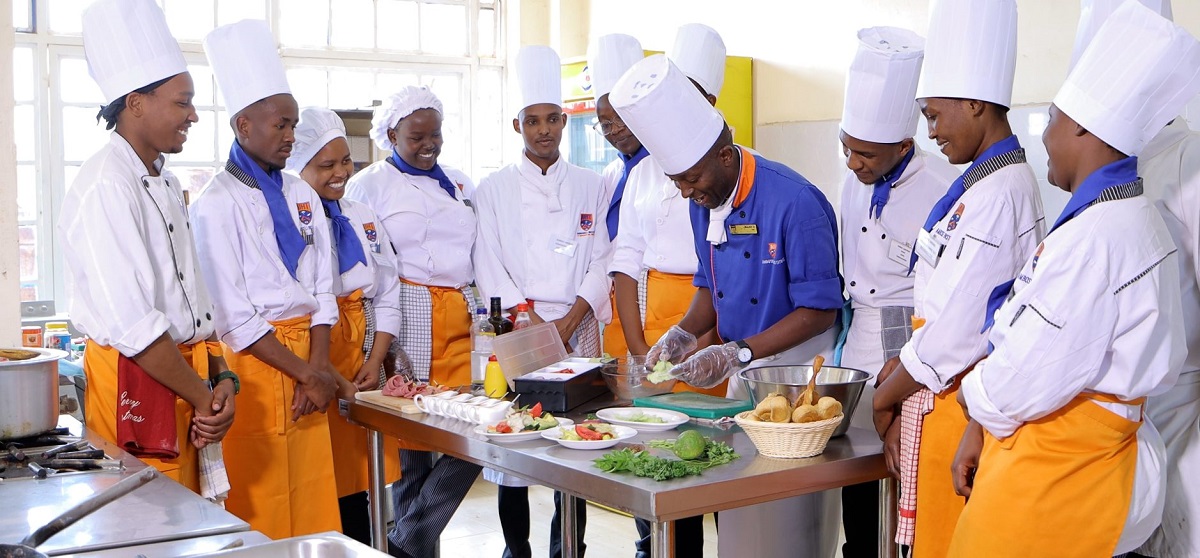
Food and beverage is a practical hospitality field, so hands-on training is an important part of a good programme.
Students should have opportunities to practice:
- Table setting
- Food service
- Beverage service
- Customer interaction
- Restaurant operations
- Banquet service
- Food safety procedures
- Stock handling
Where applicable, industrial attachment gives students an opportunity to experience real workplace environments.
Attachment can help students develop:
- Professional communication
- Customer service
- Teamwork
- Time management
- Service skills
- Workplace discipline
- Problem-solving
When choosing a food and beverage programme, ask how much practical training and workplace exposure is included.
Food and Beverage vs Catering: What’s the Difference?
Food and Beverage and Catering are closely related but have different areas of emphasis.
| Food & Beverage | Catering |
|---|---|
| Strong focus on food and drink service | Broader focus on food preparation and catering |
| Restaurant and hotel service | Events, functions and food production |
| Customer-facing | Can be kitchen- or service-focused |
| Beverage service is often important | May cover broader hospitality areas |
| Restaurant operations | Outside catering and events |
| Suitable for service professionals | Suitable for caterers and food businesses |
If you enjoy customer interaction, restaurant service and beverage operations, Food and Beverage may be a better fit.
If you prefer food production, events and broader catering operations, a catering or food production programme may be more suitable.
Career Opportunities After Studying Food and Beverage
Food and beverage graduates can work in many areas of the hospitality industry.
Hotels and Resorts
Hotels employ food and beverage professionals in:
- Restaurants
- Bars and beverage outlets
- Banquet departments
- Room service
- Conference facilities
Possible positions include:
- Food and beverage attendant
- Waiter
- Restaurant supervisor
- Food and beverage supervisor
- Food and beverage manager
Restaurants
Restaurants provide opportunities for:
- Waiters
- Food service attendants
- Restaurant assistants
- Supervisors
- Restaurant managers
Cafés and Coffee Shops
Students with beverage and barista skills can work as:
- Baristas
- Café attendants
- Beverage attendants
- Coffee shop assistants
Events and Banquets
Food and beverage professionals can work at:
- Weddings
- Conferences
- Corporate events
- Private functions
- Banquets
- Parties
Possible roles include:
- Banquet attendant
- Event service staff
- Catering assistant
- Food and beverage supervisor
Institutional Catering
Opportunities can also exist in:
- Schools
- Hospitals
- Universities
- Corporate institutions
- Training centres
International Hospitality
Food and beverage skills can also be useful when seeking hospitality opportunities outside Kenya.
International employment depends on factors such as qualifications, experience, employer requirements, immigration rules and any country-specific requirements.

Food and Beverage Salary in Kenya
Food and beverage salaries vary depending on the job title, employer, location, qualification, experience and level of responsibility.
An entry-level waiter or food service attendant will generally have different earning potential from an experienced restaurant supervisor or food and beverage manager.
Factors affecting earnings include:
- Level of qualification
- Work experience
- Job position
- Employer
- Location
- Type of hotel or restaurant
- Specialization
- Management responsibilities
Additional skills such as beverage expertise, barista skills, customer service, restaurant management and business management can also improve career progression.
Self-employed professionals have a different income model because their earnings depend on the customers they serve, pricing, business costs and profitability.

Can You Start a Business After Studying Food and Beverage?
Yes. Food and beverage skills can be useful for starting several hospitality and food-related businesses.
Start a Restaurant
Knowledge of food service, customer care, costing and restaurant operations can help you establish a restaurant or takeaway business.
Start a Café
Students with barista and beverage skills can establish:
- Coffee shops
- Small cafés
- Beverage outlets
- Mobile coffee businesses
Outside Catering
Food and beverage skills can also be used to provide services for:
- Weddings
- Corporate events
- Conferences
- Birthdays
- Private functions
Event Food and Beverage Services
You can provide professional food and beverage service for events and functions.
Mobile Food and Beverage Business
Depending on your skills and resources, you may operate a mobile food or beverage business.
Skills Needed to Run a Food and Beverage Business
Technical service skills alone are not enough. Entrepreneurs also need knowledge of:
- Food costing
- Beverage costing
- Pricing
- Stock management
- Customer service
- Marketing
- Bookkeeping
- Food safety
- Business management
- Staff management
Food and Beverage Course Progression in Kenya
Food and beverage education can provide a pathway for continued learning.
A student may progress from a lower qualification to a higher one after meeting the relevant requirements.
A simplified pathway is:
Artisan/Grade → Certificate → Diploma → Higher Qualification
Students can also develop additional specialized skills through short courses such as:
- Barista training
- Beverage service
- Customer service
- Restaurant operations
- Food safety
- Event service
Further education and industry experience can help graduates move into supervisory and management positions.

Short Food and Beverage Courses in Kenya
Not everyone needs a full certificate or diploma programme.
Short courses can be useful for people who want to develop a particular skill quickly.
Examples include:
- Barista training
- Beverage service
- Food and beverage service
- Restaurant service
- Customer service
- Table service
- Banquet service
- Food safety and hygiene
Short courses may be suitable for:
- Working professionals
- People changing careers
- Existing hospitality workers
- Entrepreneurs
- People seeking specific practical skills
- Students looking to supplement another qualification
If you want long-term progression in the hospitality industry, however, consider whether a certificate or diploma would provide a stronger qualification pathway.
How to Choose the Right Food and Beverage Course
Before enrolling, consider the following factors.
1. Your Career Goal
Do you want to become a waiter, barista, restaurant supervisor, food and beverage manager or hospitality entrepreneur?
Your answer should guide your choice.
2. Entry Requirements
Choose a programme that matches your KCSE grade or existing qualification.
3. Course Content
Don’t rely only on the course title. Review the subjects and practical skills included.
4. Duration
Consider how much time you can commit to training.
5. Total Cost
Ask about tuition and additional costs such as examinations, uniforms, practical materials and certification.
6. Practical Training
Food and beverage is a hands-on industry. Look for programmes that provide adequate practical training.
7. Industrial Attachment
Workplace experience can help you understand how real restaurants, hotels and hospitality businesses operate.
8. Certification and Recognition
Check the qualification and the relevant examining or awarding body.
9. Career Progression
Find out whether you can progress from certificate to diploma or other higher qualifications.
10. Employment Opportunities
Consider whether the skills taught are relevant to the type of hospitality work you want.
11. Entrepreneurship Opportunities
If you plan to start a restaurant, café, catering or beverage business, consider programmes that include costing, stock management and business skills.
How to Check Whether a Food and Beverage Course Is Recognized
Before paying fees, find out what qualification you will receive after completing the programme.
Consider checking:
- The awarding or examining body
- Whether the programme is appropriately recognized or approved
- Examination arrangements
- Certification
- Further education opportunities
- Whether the qualification meets the requirements of your intended career
This is particularly important if you intend to use your qualification for employment or further education.
Food and Beverage Course Intakes and Application
Food and beverage programmes may have different intake periods depending on the programme and training institution.
Before applying, confirm:
- Intake dates
- Entry requirements
- Course duration
- Fees
- Required documents
- Examination arrangements
- Practical training requirements
- Industrial attachment arrangements
Common application documents may include:
- KCSE certificate or result slip
- Identification documents
- Passport-size photographs
- Previous academic certificates where applicable
- Completed application forms
Requirements vary, so confirm the details for the specific programme before applying.
Frequently Asked Questions About Food and Beverage Courses
What are food and beverage courses?
Food and beverage courses are hospitality programmes that train students in food service, beverage service, restaurant operations, customer care, hygiene and, depending on the programme, food production and management.
Which are the best food and beverage courses in Kenya?
Popular options include Food and Beverage Service, Food and Beverage Management, Food Production, Hospitality Management, Restaurant Operations, Catering and Accommodation and specialized barista or beverage courses.
Which food and beverage course is best for becoming a waiter?
Food and Beverage Service is one of the most directly relevant options for someone who wants to work as a waiter or food service attendant.
Which course is best for becoming a restaurant manager?
Food and Beverage Management or Hospitality Management can provide a suitable foundation for restaurant management, particularly when combined with industry experience.
Can I do Food and Beverage with a D plain?
Yes. A D plain can qualify students for certain food and beverage and hospitality programmes, particularly at certificate or lower qualification levels.
What are the requirements for a food and beverage course?
Requirements vary by qualification. Certificate programmes may accept students with a D plain, while diploma programmes generally require a higher KCSE grade or a relevant certificate.
How long does a food and beverage course take in Kenya?
Short courses may take several weeks or months. Certificate programmes can take about one to two years, while diploma programmes may take around two to three years depending on the programme.
How much do food and beverage courses cost in Kenya?
Fees vary depending on the course, qualification, institution and practical requirements. Students should consider tuition as well as examination, registration, uniform, practical and certification costs.
What do you learn in a food and beverage course?
Students may learn food and beverage service, table setting, customer care, restaurant operations, beverage service, food safety, hygiene, menu knowledge, stock control and food and beverage costing.
Is Food and Beverage a good career in Kenya?
Yes. Food and beverage skills can lead to opportunities in hotels, restaurants, cafés, resorts, catering companies, events and institutional hospitality. The skills can also be used to start a business.
What jobs can I get after studying Food and Beverage?
Possible careers include waiter, food and beverage attendant, restaurant assistant, banquet attendant, barista, restaurant supervisor, food and beverage supervisor and food and beverage manager.
Can I become a chef after studying Food and Beverage?
Food and Beverage courses generally focus more on service and restaurant operations than professional cooking. If your main goal is to become a chef, consider Culinary Arts or Food Production.
Can I start a restaurant after studying Food and Beverage?
Yes. Food and beverage training can give you useful knowledge of service, restaurant operations, customer care and costing. You will also need business management, financial and marketing skills to operate a successful restaurant.
What is the difference between Food and Beverage and Catering?
Food and Beverage generally places greater emphasis on food and drink service, restaurant operations and customer experience, while Catering can cover broader food production, events and catering operations.
Can I progress from a certificate to a diploma in Food and Beverage?
Depending on the programme and entry requirements, students may be able to progress from a certificate to a diploma or another higher qualification.
Are short Food and Beverage courses worth it?
Short courses can be useful for developing specific skills such as barista training, beverage service or customer service. For long-term career progression, a recognized certificate or diploma may be more appropriate.
Start Your Food and Beverage Career at NIE College
Choosing the right food and beverage course is an important step towards building a career in hospitality, restaurants, hotels, cafés and food service.
Before enrolling, consider your career goal, entry requirements, course content, duration, total fees, practical training, industrial attachment and qualification recognition.
Whether you want to become a food and beverage service professional, barista, restaurant supervisor, hospitality professional or eventually run your own restaurant or café, the right training can give you the practical foundation you need.
At NIE College, students interested in food and beverage and hospitality training can explore programmes designed to develop practical skills relevant to the hospitality industry.
Ready to start your food and beverage career? Explore the food and beverage courses available at NIE College and choose a programme that matches your career goals.
Looking for a college to study Food and Beverage?
Once you have identified the right course, the next step is choosing where to study.
