

The hospitality industry is one of the largest employers globally, offering career opportunities in hotels, resorts, restaurants, airlines, cruise ships, event companies, tourism businesses and customer service organizations. As the industry continues to grow, the demand for skilled hospitality professionals remains strong.
There are various hospitality courses in Kenya, ranging from short certificate programmes to diploma-level qualifications. These courses equip students with practical skills in customer service, hotel operations, food and beverage service, front office management, housekeeping, event planning and hospitality management.
If you are wondering which hospitality course is best, the answer depends on your career goals. Some students want to work in hotels and resorts, while others aim for careers in tourism, event management, restaurant operations or hospitality management.
This guide covers the best hospitality courses in Kenya, entry requirements, duration, approximate fees, skills acquired, career opportunities, salary expectations and business opportunities.
What Are Hospitality Courses?
Hospitality courses are training programmes that prepare students to work in industries that provide accommodation, food, entertainment, travel and customer service experiences.
These courses focus on ensuring guests receive excellent service while helping organizations operate efficiently.
Students in hospitality courses learn how to manage guest experiences, handle customer requests, coordinate services and maintain high professional standards.
Hospitality training can prepare students for careers in:
- Hotels
- Resorts
- Restaurants
- Event companies
- Airlines
- Cruise ships
- Conference centres
- Tourism businesses
- Hospitality consulting firms
- Customer service organizations
What Do Hospitality Courses Cover?
 The content varies depending on the qualification and specialization, but most hospitality courses cover:
- Customer service
- Hotel operations
- Front office operations
- Housekeeping management
- Food and beverage service
- Event management
- Hospitality communication
- Guest relations
- Business management
- Marketing
- Team leadership
- Health and safety
- Hospitality technology
- Professional ethics
Students also develop interpersonal, communication and organizational skills that are highly valued by employers.
Who Can Study Hospitality Courses?
Hospitality courses are suitable for:
- KCSE graduates
- Students interested in customer service careers
- Individuals who enjoy interacting with people
- Aspiring hotel professionals
- Restaurant and food service professionals
- Event planners
- Tourism professionals
- Entrepreneurs interested in hospitality businesses
- Career changers seeking practical training
The industry values both technical knowledge and strong people skills, making hospitality a good option for individuals who enjoy serving and assisting others.
Types of Hospitality Courses in Kenya
There are several hospitality-related programmes available.
| Hospitality Course | Main Focus | Typical Level | Best For |
|---|---|---|---|
| Hospitality Management | Hotel and hospitality operations | Diploma/Certificate | Future hospitality managers |
| Hotel and Hospitality Management | Hotel administration and guest services | Diploma/Certificate | Hotel careers |
| Hospitality and Tourism Management | Hospitality and tourism operations | Diploma | Hospitality and tourism professionals |
| Front Office Operations | Reception and guest services | Certificate/Short Course | Front office careers |
| Housekeeping Operations | Accommodation management | Certificate/Short Course | Housekeeping professionals |
| Event Management | Planning and managing events | Certificate/Diploma | Event planners |
| Customer Service in Hospitality | Guest relations and service excellence | Short Course | Customer-facing roles |
| Hospitality Supervision | Team leadership in hospitality | Certificate | Supervisory roles |
The best hospitality course depends on the career path you want to pursue.
1. Hospitality Management Course
Hospitality Management is among the most popular hospitality courses in Kenya.
It focuses on the operational and management aspects of hospitality businesses.
What Do You Learn?
Students may learn:
- Hotel operations
- Customer service
- Front office management
- Housekeeping management
- Food and beverage operations
- Hospitality marketing
- Human resource management
- Financial management
- Leadership skills
- Business communication
Career Opportunities
Graduates can work as:
- Hospitality officer
- Hotel supervisor
- Guest relations officer
- Hospitality coordinator
- Operations assistant
- Customer service representative
With experience, graduates can progress into management positions.
2. Hotel and Hospitality Management
This programme focuses specifically on hotel operations and guest services.
Students learn how hotels function and how to deliver excellent guest experiences.
Areas Covered
Training may include:
- Hotel administration
- Guest relations
- Reservations management
- Front office operations
- Housekeeping
- Hospitality communication
- Hotel marketing
- Customer service
Career Opportunities
Graduates may work in:
- Hotels
- Resorts
- Lodges
- Conference centres
- Guest houses
Possible job titles include:
- Front office officer
- Hotel administrator
- Reservations officer
- Guest relations officer
- Hotel supervisor
3. Hospitality and Tourism Management
Hospitality and tourism are closely connected industries.
This programme combines hospitality operations with tourism management.
What Do Students Learn?
- Hospitality operations
- Tourism principles
- Customer service
- Travel operations
- Event management
- Guest relations
- Marketing
- Business management
Career Opportunities
Graduates may work in:
- Hotels
- Tour companies
- Travel agencies
- Resorts
- Tourism organizations
- Conference facilities
4. Front Office Operations
Front office professionals are often the first people guests interact with.
This course focuses on guest reception and customer service.
Skills Covered
Students may learn:
- Guest registration
- Reservations
- Telephone handling
- Customer care
- Hospitality communication
- Complaint handling
- Front office software
- Reception procedures
Career Opportunities
Graduates can work as:
- Receptionist
- Front office assistant
- Reservations clerk
- Guest relations assistant
- Customer service officer
5. Housekeeping Operations
Housekeeping is a critical department in hotels and accommodation facilities.
The course focuses on maintaining cleanliness, comfort and guest satisfaction.
Areas Covered
- Room preparation
- Laundry operations
- Cleaning procedures
- Accommodation services
- Inventory management
- Hygiene standards
- Customer service
Career Opportunities
Graduates can become:
- Housekeeping assistant
- Housekeeping supervisor
- Accommodation attendant
- Hotel operations assistant
6. Event Management
Event management is an important specialization within hospitality.
Students learn how to plan and coordinate successful events.
Topics May Include
- Event planning
- Budgeting
- Venue management
- Customer relations
- Marketing
- Event logistics
- Vendor coordination
- Risk management
Career Opportunities
Graduates may work as:
- Event coordinator
- Event planner
- Conference assistant
- Wedding coordinator
- Events officer
7. Customer Service in Hospitality
Excellent customer service is the foundation of successful hospitality businesses.
This course focuses on guest satisfaction and service excellence.
Skills Learned
- Customer care
- Communication skills
- Conflict resolution
- Professional etiquette
- Complaint handling
- Service standards
- Teamwork
Career Opportunities
These skills are useful in:
- Hotels
- Restaurants
- Airlines
- Travel agencies
- Customer service departments
8. Hospitality Supervision
Hospitality supervisors coordinate teams and ensure smooth operations.
This programme helps students develop leadership and management skills.
Areas Covered
- Team leadership
- Staff supervision
- Performance management
- Customer service oversight
- Operations management
- Communication skills
Career Opportunities
Graduates can pursue roles such as:
- Hospitality supervisor
- Team leader
- Shift supervisor
- Operations supervisor
Which Hospitality Course Is Best for You?
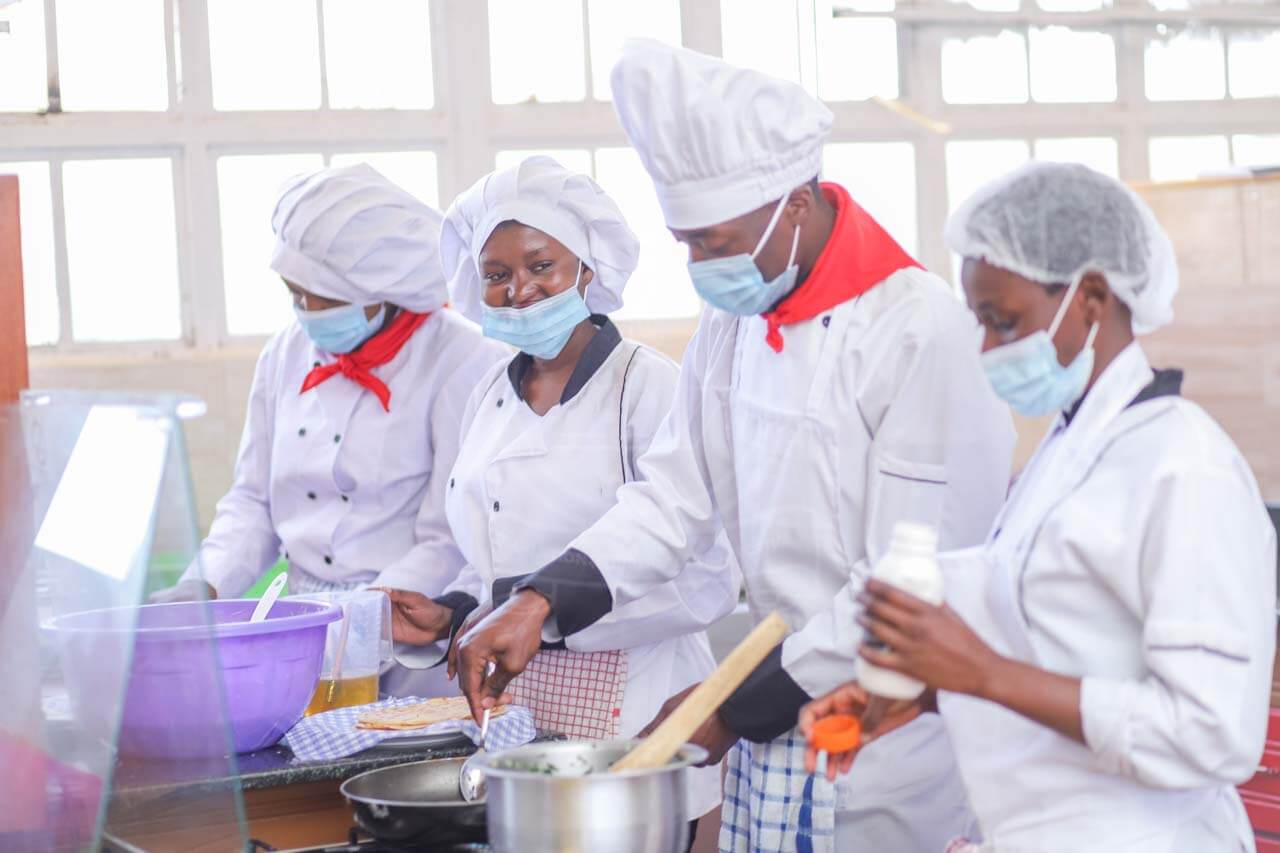
Your career goals should guide your choice.
| Career Goal | Recommended Hospitality Course |
|---|---|
| Work in hotels | Hotel and Hospitality Management |
| Become a hospitality manager | Hospitality Management |
| Work in tourism and hospitality | Hospitality and Tourism Management |
| Work at hotel reception | Front Office Operations |
| Specialize in accommodation services | Housekeeping Operations |
| Become an event planner | Event Management |
| Develop customer service skills | Customer Service in Hospitality |
| Move into supervisory roles | Hospitality Supervision |
Hospitality Courses Entry Requirements in Kenya
Entry requirements vary depending on the qualification level and institution.
| Qualification Level | Typical Entry Requirement |
|---|---|
| Short Course | Varies by programme |
| Artisan | Varies by institution |
| Certificate | Often KCSE D Plain or equivalent |
| Diploma | Often KCSE C- or relevant certificate |
Students should confirm the specific requirements for the programme they wish to pursue.
Can I Study Hospitality Courses With a D Plain?
Yes. Many certificate-level hospitality courses accept students with a KCSE D Plain or equivalent qualification.
Students can later progress to higher qualifications after gaining experience or additional certifications.
Can I Study Hospitality After KCSE?
Yes. Hospitality courses are available for KCSE graduates at certificate, diploma and short-course levels.
The qualification you qualify for depends on your KCSE grade and the institution’s admission requirements.
How Long Do Hospitality Courses Take?
The duration depends on the qualification level and programme structure.
| Programme Type | Approximate Duration |
|---|---|
| Short Course | Several weeks to months |
| Artisan Programme | Several months to 1 year |
| Certificate | About 1–2 years |
| Diploma | About 2–3 years |
Specialized hospitality courses may be completed faster than full diploma programmes.
How Much Do Hospitality Courses Cost in Kenya?
Hospitality course fees vary depending on:
- Institution
- Qualification level
- Duration
- Training facilities
- Practical requirements
| Programme Type | General Cost Level |
|---|---|
| Short Course | Lower cost |
| Artisan Programme | Moderate cost |
| Certificate | Moderate cost |
| Diploma | Higher cost |
Students should ask whether fees include:
- Tuition
- Examination fees
- Registration fees
- Uniforms
- Industrial attachment costs
- Practical training expenses
What Skills Do Hospitality Courses Develop?
Hospitality courses help students develop both technical and soft skills.
Customer Service Skills
Students learn:
- Professional communication
- Guest relations
- Complaint handling
- Service delivery
Operational Skills
Students gain knowledge in:
- Hotel operations
- Front office procedures
- Housekeeping systems
- Event coordination
Leadership Skills
Management-focused programmes may include:
- Team supervision
- Staff management
- Decision-making
- Problem-solving
Business Skills
Students may also learn:
- Marketing
- Financial management
- Business communication
- Entrepreneurship
Practical Training in Hospitality Courses
Practical training is essential because hospitality is a service-oriented industry.
Students may gain experience through:
- Simulated hospitality environments
- Practical workshops
- Industry projects
- Industrial attachment
- Hotel placements
Practical exposure helps students understand real workplace expectations.
Hospitality Courses vs Tourism Courses
Although closely related, hospitality and tourism focus on different areas.
| Hospitality Courses | Tourism Courses |
|---|---|
| Hotels and accommodation | Travel and tourism |
| Guest services | Tour operations |
| Food and beverage service | Travel planning |
| Housekeeping | Destination management |
| Front office operations | Tour guiding |
| Event management | Tourism marketing |
Students interested in both sectors may benefit from Hospitality and Tourism Management programmes.
Career Opportunities After Hospitality Courses
Hospitality graduates can work in various sectors.
Hotels and Resorts
Possible roles include:
- Front office officer
- Guest relations officer
- Hotel supervisor
- Reservations officer
Restaurants and Food Service
Graduates may work as:
- Restaurant supervisor
- Service coordinator
- Customer service officer
Event Companies
Career opportunities include:
- Event planner
- Conference coordinator
- Events assistant
Airlines and Travel Companies
Hospitality skills are also valuable in customer service and passenger service roles.
Tourism Organizations
Graduates with hospitality and tourism qualifications may work in tourism-related organizations.
Hospitality Salary in Kenya
Hospitality salaries vary depending on:
- Experience
- Qualifications
- Employer
- Location
- Job role
- Industry sector
Entry-level employees generally earn less than supervisors and managers.
Specialized skills, leadership experience and additional qualifications can improve earning potential.
Can You Start a Business After Studying Hospitality?
Yes. Hospitality courses can provide skills useful for entrepreneurship.
Business Opportunities Include:
- Hotel management services
- Event planning businesses
- Conference management
- Guest house operations
- Hospitality consulting
- Customer service training
Entrepreneurs benefit from combining hospitality knowledge with business management skills.
Hospitality Course Progression
 A common progression pathway is:
Short Course → Certificate → Diploma → Advanced Hospitality Specialization
Graduates can also pursue further specialization in:
- Hotel management
- Event management
- Tourism management
- Customer service
- Hospitality leadership
- Business administration
How to Choose the Best Hospitality Courses
Before enrolling, consider:
1. Career Goals
Choose a course aligned with your desired hospitality career.
2. Entry Requirements
Confirm you meet the academic requirements.
3. Practical Training
Look for programmes that include hands-on experience.
4. Course Duration
Choose a timeline that suits your plans.
5. Cost
Consider tuition and additional expenses.
6. Industry Exposure
Industrial attachment opportunities can be valuable.
7. Certification
Confirm the qualification awarded upon completion.
8. Progression Opportunities
Check whether the course allows further academic advancement.
Frequently Asked Questions About Hospitality Courses
What are hospitality courses?
Hospitality courses prepare students for careers in hotels, resorts, restaurants, event companies and customer service organizations.
Which are the best hospitality courses in Kenya?
Popular options include Hospitality Management, Hotel and Hospitality Management, Hospitality and Tourism Management, Front Office Operations, Housekeeping Operations and Event Management.
Can I study hospitality courses with a D Plain?
Yes. Many certificate-level hospitality courses accept students with a D Plain.
How long do hospitality courses take?
Short courses may take weeks or months, certificates typically take 1–2 years and diplomas usually take 2–3 years.
What jobs can I get after hospitality courses?
Graduates may work as hotel supervisors, guest relations officers, front office officers, event coordinators, customer service representatives and hospitality managers.
Are hospitality courses marketable in Kenya?
Yes. Hospitality skills are required in hotels, resorts, restaurants, tourism businesses, conference centres and customer service organizations.
Can I start a business after studying hospitality?
Yes. Hospitality graduates can start event management businesses, guest houses, hospitality consulting services and other service-based ventures.
Start Your Hospitality Career at NIE College
The hospitality industry offers exciting opportunities for individuals who enjoy working with people and delivering exceptional customer experiences. Whether you want to work in hotels, resorts, events, tourism or hospitality management, the right training can provide a strong foundation.
Before choosing among the available hospitality courses in Kenya, consider your career goals, entry requirements, duration, fees, practical training opportunities and progression pathways.
At NIE College, students can explore hospitality-related programmes designed to develop practical skills and industry-ready competencies.
Ready to begin your journey in hospitality? Explore the hospitality courses available at NIE College and choose a programme that aligns with your career aspirations.
Looking for a College to Study Hospitality?
Once you have identified the hospitality course you want to pursue, the next step is selecting the right institution.